Sunday, December 20, 2009

Ordered today on Amazon!


The Element by Sir Ken Robinson

British creativity expert Sir Ken Robinson believes we're all born with creative capacities but we lose them the more time we spend in the world.

Here him speak at http://www.abc.net.au/rn/lifematters/stories/2009/2598512.htm

Another interesting interview on the go at the moment is between Richard Holloway, former bishop of Edinburgh and author of 25 books, and Ramona Koval (The Book Show, Radio National) . He calls himself a Christian agnostic.

Interesting bloke ... not that flattering about organised religion but this is a nice quote hey?

"So the saints I'm talking about are the people who see power and challenge it, who speak against it even though it may end in them being crucified or killed, and there are always very few of them, but they make me shiver at the thought of their courage, and I hope occasionally, just occasionally, to emulate it."

Ok - that's my acknowledgement of this 'religious' time of year.

Season's greetings!

Tuesday, December 15, 2009

Old dogs, new tricks


VALE Louis Vuitton, pictured here, who - last weekend - had a fight with a car and he lost. I took him for an imaginary run on Monday when I got the news. We had a lot of fun. Bebe, THE dog of my girlhood and truly a girl's best friend, ran out from the bushes too and joined in the run. I feel ok. They are going to be friends in pooch heaven.

Thursday, December 3, 2009

Learning from a 'made up' world


I have a relative who does not read fiction. She says there is too much ‘real’ stuff to learn about in the world so who has time for made up stories? I get her point, I really do, but I cannot tow her line. Made up stories, as she calls these, have kept me sane for years. Reading widely and voraciously is essential to my wellbeing. Now if that means I have some problem dealing with reality then, so be it. I do have problems dealing with reality. Deal with that!

I learn from my ‘made up’ sources though …

For instance, when in periods of brain drain where the "leetle grey cells", as Hercule Poirot calls them, are working overtime on claustrophobic matters, like the budgetary topics I’m working on for the mag currently, I really need easy reading. Hence, when Mrs P handed me a copy of John Grisham’s The Summons, last week I danced around for a minute and then snapped it up, knowing Grisham’s expert tale telling skills would carry me along without me having to think too much.

Still … a writer like Grisham doesn’t miss his chance to get across some theories about modern politics and society in the USA’s South and one can delve into that further if one wishes. I did not wish but I did FINALLY look up the term ‘antebellum’ which has come up a million times in books about the South. Now, with my growing interest in interiors and architecture, knowing what this word means takes on even more relevance.

To quote my favourite office researcher, Wiki: The Antebellum Period (from the Latin ante ‘before’ and bellum ‘war’) was the time period in America from after the birth of the United States to the start of the American Civil War. The Antebellum Age was a time of great transition because of the industrial revolution in America. It also was a time of growth in slavery in the American South. It was a phase in American history when America spread towards the west coast which among historians is generally referred to as ‘Westward Expansion’.

The term antebellum is also used to describe the architecture of the pre-war South. Many Southern plantation houses use this style, including the one I have pictured, the Parrott-Camp-Soucy House built in 1890 ~ Victorian Antebellum. Fantastic! And what a great prompt for a story or novel.

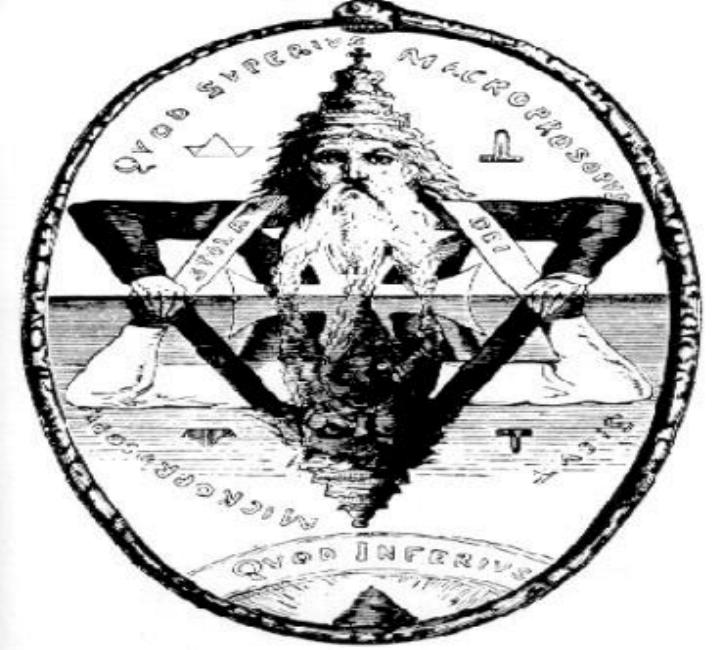
Now other books I have read recently, while fiction, have led me to pick up books of fact. One is The Essential Golden Dawn, an introduction to High Magic. Bet you did not know that The Golden Dawn is one of the most influential and respected systems of magic in the world. Over a century old, the teachings of this once-secret society are considered the capstone of the Western Esoteric Tradition.

Now I am no witch, I don’t even see a naturopath but I have an open mind and, more to the point, I love to know about the other-worldly things great men of history have been captivated by. This group, Hermetic Order of the Golden Dawn, sound so bizarre I just have to know more. In this matter it is certainly a case of truth being stranger than fiction.

The Hermetic Order of the Golden Dawn (or, more commonly, the Golden Dawn) was a magical order founded in Great Britain during the late 19th and early 20th centuries, which practiced theurgy (rites for bringing down to earth planetary and other spirits or gods and spiritual development). Apparently it has been one of the largest single influences on 20th-century Western occultism.

Now I can’t remember what brought me to this book. I think Golden Dawn members were mentioned in a particularly dreary English novel I read a few months back. I think a few members were authors (including Yeats) and I decided to find out more. I can’t promise how much of The Essential Golden Dawn I will get through but I’ll bloody well enjoy trying.

Actually Algernon Henry Blackwood was one of the members, I remember now. Blackwood, CBE (14 March 1869 – 10 December 1951) was an English writer of fiction dealing with the supernatural, who was also a journalist and a broadcasting narrator. Hence I am also reading his book, John Silence, Psychical Investigator. See how it all works?

Wednesday, November 25, 2009

Vicki Pollard sold this house


I swear to God ... I was walking home from dropping the car at the garage today for daylight robbery service (the bend over while we give it to you gold standard from Holden) when I saw that Vicki Pollard from Woodards Bentleigh is running around selling houses. I ask ya, "Would you buy a house from this woman?"

Monday, November 16, 2009

Reading Science Fiction has changed my wardrobe slightly


I recently read a Sci Fi book called House of Suns by Alastair Reynolds. I hadn't read Sci Fi since I was a teenager but I've wanted to branch out in my reading and a young lad in my writing class earlier this year was an aficionado. Plus, I have a library card. It's a failsafe doorway to varied, no cost reading.

Reynolds is no simnple fantasist, creating a Harry Potter like world that relies on nothing more than imagination and memories of fairytales gone. He has a Ph. D in astronomy and spent years working as an astrophysicist.

See this is what I like about my blog. I can remind myself that I got through this BIG book - 473 pages - because, as complicated and 'sciency' as it was, it had a good story at its heart, full of adventure and romance, just based six million years after man first walked the earth. That's all!

Anyhoo, he is apparently famous for his space operas. Now I had to look these up straight away. Wiki says: "Space opera is a subgenre of speculative fiction or science fiction that emphasizes romantic, often melodramatic adventure, set mainly or entirely in space, generally involving conflict between opponents possessing powerful (and sometimes quite fanciful) technologies and abilities. Perhaps the most significant trait of space opera is that settings, characters, battles, powers, and themes tend to be very large-scale." So now we know that.

I don't see myself reading a whole heap of this but I was intrigued to know more about some of the things in Reynolds' bio. One for instance, was his position as a 'Gollancz' bestseller. I looked up Gollancz and discovered it's a publishing company, part of Orion Books. It publishes a range of popular and critically acclaimed authors, including Alastair Reynolds, as well as a number of Terry Pratchett titles. Its Science Fiction and Fantasy Masterworks series, reissuing the great novels in the two genres, have been widely acclaimed. Since 2005, Gollancz has also published Manga. See, now if I ever decide to write a SF book, I know which company to approach.

There's also the matter of his Arthur C. Clarke Award. Apparently this is the most prestigious award for science fiction in Britain. Clarke wrote 100 books and more than 1,000 short stories and essays over 60 years. Among his best-selling novels are Childhood's End, 2001: A Space Odyssey, Rendezvous with Rama and Fountains of Paradise.

One of his short stories ('Dial F for Frankenstein', 1964) inspired British computer scientist Tim Berners-Lee to invent the World Wide Web in 1989. Another short story ('The Sentinel', 1948) was expanded to make the movie 2001: A Space Odyssey, which he co-wrote with director Stanley Kubrick. They shared an Oscar nomination for the best screenplay in 1969.

See ... I learn something every day ... when I blog.

Sunday, November 15, 2009

Not quite Oprah's Aha moment!


The temperature has dropped and I can open the sunroom doors. "Big deal" says you but, for a chick who filed 12 pieces for the February issue last week and wrote a complete proposal for a new project upon which her income relies, this is akin to celebrating rain in the Kalahari Desert. The sunroom was hot last week, my cheap-o fan working overtime, and a box full of cans of Zero Coke was not helping. My blood and my thought patterns seemed to slow down along with my typing ratio. Glad to see the back of that one I promise you.

So as I wrote my TO DO list this morning, cool fresh air tickling my bare shoulders (ah ... I am wearing new fave strapless working from home maxi-dress. The glamour!) I stopped in my tracks and thought, "Blog - you must write something there today". Knowing I have been patchy to say the least in my postings I began to wonder why I had started this thing in the first place. I remember last year I had a re-think of the blog and wrote myself a new mission type statement about it.

This is what is great about a blog when you have a mind like a sieve like mine. You can go back and research what you previously thought and wrote. Hallelujah! If I could do this with every area of my life ... stop, rewind and discover what I promised someone else I'd do, what I promised myself I'd do, what I even thought about something, how much easier would things be? I tell you it would make my filing system easier. I seem to change that every week or two so discover important, meaningful items that would have been pertinent to various tasks and activities LONG after their time has passed. Maybe I need a filing blog ... note to self.

So, almost a year ago, this is what I wrote:

My blog, I have been forced to remind myself, is a way of maintaining some writing discipline away from work constraints. It has a purpose but one known only to me. That’s ok. If anything, in 2009 I hope to use it more constructively as a place to explore some thoughts and as a workroom. This is, I suppose, my online shed. Maybe I should redesign it to look like one? I have a constant supply of sticky notes and paper scraps with words, events, websites, ideas scribbled on them. My blog should be the place I pull this stuff together, research and investigate the various threads and chart the results of this activity, similar to the way a home handyman might gather design ideas and bits of woods to try and knock something together.

Hmmm … sure did sound like a good idea at the time. I still have the sticky notes. Pussy Prue is sitting on two of them now. If I look back at some of my postings I find I have investigated some thoughts and ‘leads’ from things I’ve been reading and listening to. Because I do have a shocking memory and am prone to speed reading and multi-tasking this has been good because I’ve actually stopped and looked a little more closely at certain things, researching them for a post and, therefore, understanding them a little better. I will stick to this for now but try and improve the writing.

I presented the first chapter of my book at my writing group last week and the response was warm (they’re nice, nice people) but I dreamt that night that I had a beautiful, sweet and loyal dog that I kept at a caravan park and visited every couple of weeks. When there I slathered it with love and attention, then just jumped in the car and took off, expecting it to fend for itself. I think the dog is my personal, creative writing. I focus in for a minute, get absorbed in character and plot and so forth and then wrack off back into the ‘real’ world and don’t think of it again for ages. Every thing comes before my writing, even drinking alcohol, going grocery shopping and watching crap TV. I know this is not good. I’ve read Habits of Highly Effective People for God’s sake!

Question: Can I change this situation? Does it matter?
Answer: Only to me but, then, doesn’t 90 per cent of what happens in our lives only really matters to us anyway?

Ooooh … deep.

PS: Mrs Underhill Book Club on hiatus til New Year. Nominate a book for us to read over summer.

Sunday, November 1, 2009

Away from home and blog


I am ashamed, deeply ashamed, at how long I have neglected my Mrs Underhill ramblings. Yes I had three weeks holiday and yes I vowed to stay away from the computer as much as possible over that time but, really, it just won't do!

Too much has happened to bang on about ... 10 days in a miner's cottage in Daylesford (writing darlings, writing), a soujourn down the west coast and much local drinking, eating, movie watching, napping and wide-ranging exploring.

General discoveries included the fact that, when presented with tracts of time to simply write fiction in, it is not as easy to knuckle down as one imagines. On the flip side, however, once immersed in a story, it is amazing how much in life can come in useful for your characters and setting.

Also discovered was the unique charm of the locals at Daylesford's Farmer's Arms on a quiet Friday afternoon, the fact that the Lake House restaurnat is hugely expensive but fun to frolic in and the fact that, five kilos later, all such culinary frolicking (and boozing) must come to an end.

So here are a couple of shots ... of Daylesford and of the 17th John's Rod and Custom Picnic (which we attended this Sunday just gone). Say no more!